
- About US
- Key Programs & Courses
- Research
- Programme
- Public Health & Outreach
- Collaboration & Linkages
- Key Achievements
- Who’s Who
- Publications & Resources
- Digital Integration
- Contact
- Benefits
Rashtriya Ayurveda Vidyapeeth (RAV), New Delhi
Parent Ministry: Ministry of AYUSH, Government of India
Established: 1988
Location: Dhanvantari Bhavan, Road No. 66, Punjabi Bagh (West), New Delhi – 110026
Status: Autonomous Organization under Ministry of AYUSH
Official Website: https://ravdelhi.nic.in
What Is RAV, New Delhi?
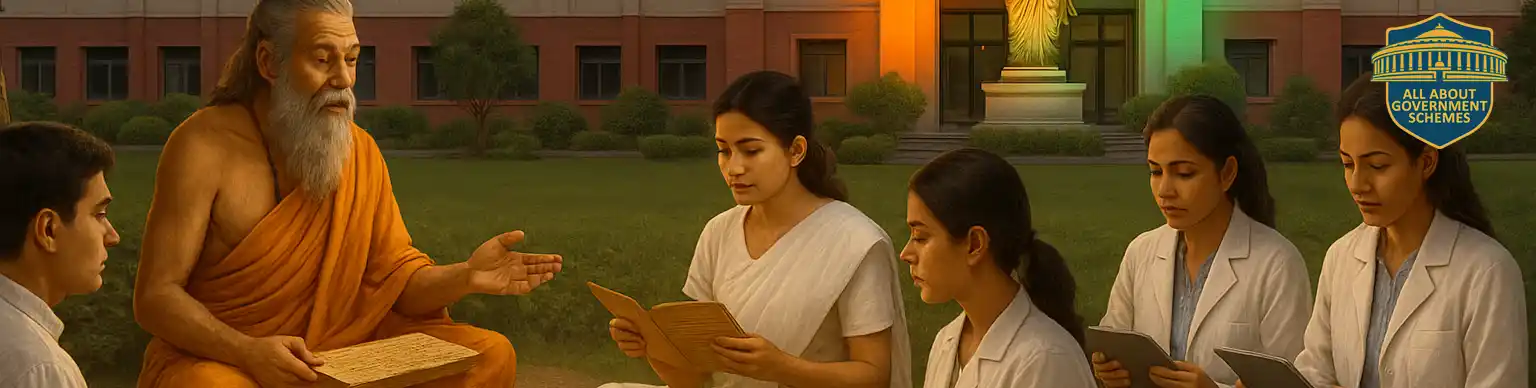
The Rashtriya Ayurveda Vidyapeeth (RAV) is the national apex institution for Ayurvedic mentorship, training, and professional development, focusing on the revival of India’s ancient Guru–Shishya Parampara (traditional teacher-disciple learning model).
RAV works to develop skilled Ayurvedic practitioners, promote research-oriented education, and ensure the standardization and professional growth of Ayurveda across India.
In simple words —
RAV New Delhi is the national guardian of Ayurvedic wisdom — connecting traditional learning with modern scientific and educational standards.
Vision & Mission
| Goal | Description |
|---|---|
| Preserve Ayurvedic Heritage | To revive and sustain classical Ayurveda education through traditional mentorship. |
| Enhance Skill Development | To train practitioners, researchers, and teachers in advanced Ayurvedic concepts. |
| Promote Research Orientation | To integrate traditional knowledge with scientific research and evidence. |
| Act as a Nodal Institution | To coordinate and support Ayurveda training programs nationwide. |
| Build Professional Excellence | To upgrade competencies of practitioners through CME and fellowships. |
Institutional Overview
| Division | Function |
|---|---|
| Guru–Shishya Parampara Training (GSPT) | Mentorship-based clinical and theoretical training. |
| Continuing Medical Education (CME) | Skill upgradation and clinical orientation for registered practitioners. |
| Fellowship & Certificate Courses | Advanced training in specialized Ayurvedic disciplines. |
| Research & Documentation Unit | Publication of classical texts, journals, and monographs. |
| Academic Coordination Wing | Collaborations with universities and councils for curriculum reform. |
Key Programs & Courses
| Program | Duration | Description |
|---|---|---|
| Guru–Shishya Parampara (GSP) Program | 1 year | Students (Shishyas) learn directly under senior Vaidyas (Gurus). |
| Continuing Medical Education (CME) | 1–2 weeks | Short-term training for registered Ayurvedic doctors. |
| Fellowship Program in Ayurveda (FPA) | 6–12 months | Specialized training in Kayachikitsa, Panchakarma, Dravyaguna, etc. |
| Training of Teachers (TOT) | 5–10 days | Pedagogical and teaching skill enhancement for Ayurveda faculty. |
| e-Learning Courses | Variable | Online certification in Ayurvedic fundamentals and public health. |
Guru–Shishya Program Highlights:
- Conducted in over 100 traditional Gurukuls and clinics.
- Trains students under national-level Ayurvedic masters.
- Recognized for its hands-on and personalized mentorship approach.
Research & Knowledge Development
| Research Focus | Description |
|---|---|
| Traditional Knowledge Preservation | Documentation and publication of classical Ayurvedic manuscripts. |
| Standard Treatment Protocols | Development of national clinical guidelines in Ayurveda. |
| Case Documentation | Compilation of best clinical practices of traditional Vaidyas. |
| Collaborative Research | Partnerships with CCRAS, universities, and AYUSH institutions. |
| Evidence-Based Ayurveda | Promotion of scientifically validated Ayurvedic principles. |
Recent Projects:
- Preparation of Ayurveda Compendium Series for students and practitioners.
- Digitization of rare classical manuscripts.
- Development of National Repository of Ayurveda Case Studies (NRACS).
- Collaborative CME programs with AIIMS and AIIA.
Capacity-Building & Training Initiatives
| Program | Objective |
|---|---|
| National CME Scheme | Continuous upgradation of practicing Ayurvedic physicians. |
| State-Level CME Units | Conducted in partnership with AYUSH directorates. |
| Skill Development for Para-Medics | Basic Ayurveda, Yoga, and Panchakarma assistance training. |
| Curriculum Reform Workshops | Faculty consultation for AYUSH universities. |
| Mentor Development Program | Training of new Gurus for nationwide mentorship programs. |
Public Health & Outreach
| Initiative | Description |
|---|---|
| Ayurveda Awareness Camps | National-level public education drives on Ayurveda and preventive health. |
| Public Health Integration | Collaboration with AYUSH Mission and Health Ministry programs. |
| Publications in Regional Languages | Simplified Ayurveda books and pamphlets for citizens. |
| Digital Awareness Campaigns | Use of social media and online portals for knowledge dissemination. |
| Community Health Education | Lifestyle, diet, and wellness programs through Ayurveda. |
Collaboration & Linkages
| Partner Institution | Area of Collaboration |
|---|---|
| Central Council for Research in Ayurvedic Sciences (CCRAS) | Research and education initiatives. |
| All India Institute of Ayurveda (AIIA) | Advanced training and clinical exchange. |
| National Commission for Indian System of Medicine (NCISM) | Curriculum design and CME accreditation. |
| State AYUSH Directorates | Field-level training and awareness programs. |
| WHO-GCTM (Jamnagar) | International teacher and researcher exchange programs. |
Key Achievements
Trained over 10,000 Ayurvedic practitioners through CME and GSP programs.
Published 150+ classical and modern Ayurveda monographs.
Established digital repository of Ayurveda Gurus and Shishyas.
Developed national training modules for teachers and clinicians.
Organized National Ayurveda Skill Development Workshops.
Launched e-Guru Ayurveda Portal for online mentorship.
Who’s Who (Leadership & Governance)
| Designation | Officer Name | Role |
|---|---|---|
| Director, RAV | Prof. (Vaidya) Rakesh Sharma (as of 2025) | Institutional head overseeing programs, administration, and national coordination. |
| Secretary, Ministry of AYUSH | Vaidya Rajesh Kotecha | Policy guidance and institutional oversight. |
| Dean (Academics) | — | Curriculum and training management. |
| Research Officer (Ayurveda) | — | Coordination of CME and documentation projects. |
| Administrative Officer | — | Institutional operations and HR. |
Publications & Resources
- Research Monographs and Public Health Manuals
- RAV Annual Reports
- Proceedings of National CME Programs
- Ayurveda Compendium Series
- Directory of Gurus and Shishyas
- Teaching & Learning Methodology Handbook
Digital Integration
| Platform | Function |
|---|---|
| e-Guru Ayurveda Portal | Online mentorship and e-learning system. |
| AYUSH Research Portal | Repository of RAV training and research data. |
| AYUSH GRID | Institutional monitoring and performance analytics. |
| Digital Library | Access to recorded lectures, manuscripts, and case studies. |
| NAM Portal | Funding and implementation data. |
Contact & Grievance Redressal
Rashtriya Ayurveda Vidyapeeth (RAV)
📍 Dhanvantari Bhavan, Road No. 66, Punjabi Bagh (West), New Delhi – 110026
📧 Email: director-rav@nic.in / info@ravdelhi.nic.in
📞 Phone: 011-25228548 / 011-25229753
🌐 Website: https://ravdelhi.nic.in
Grievances:
https://pgportal.gov.in → Ministry of AYUSH → Rashtriya Ayurveda Vidyapeeth (RAV)
Useful Links
- National AYUSH Mission: https://namayush.gov.in
- Ministry of AYUSH: https://ayush.gov.in
- All India Institute of Ayurveda (AIIA): https://aiia.gov.in
- CCRAS: https://ccras.nic.in
- AYUSH GRID: https://ayushgrid.gov.in
Benefits to Citizens
| Beneficiary | Benefit |
|---|---|
| Students | Access to traditional mentorship and modern training. |
| Practitioners | CME programs and national-level skill enhancement. |
| Researchers | Opportunity to study classical manuscripts and case archives. |
| Teachers | Faculty development and teaching methodology workshops. |
| Public | Awareness about Ayurveda-based preventive healthcare. |
Impact
- Supports integration of traditional knowledge with modern healthcare.
- Revived the Guru–Shishya Parampara as a national model of skill transmission.
- Created a network of 500+ traditional Gurus across India.
- Strengthened Ayurveda education and teaching quality.
- Acts as a national hub for Ayurveda training, mentorship, and policy advisory.