- About
- Institutions Involved
- Process Includes
- Division
- Beneficiaries
- Who’s Who
- Related Bodies
- Funding Support
- Contact
- FAQs
Nodal Authority: Ministry of AYUSH, Government of India
Implementing Bodies:
- Central Council for Research in Ayurvedic Sciences (CCRAS)
- Central Council for Research in Homoeopathy (CCRH)
- Central Council for Research in Unani Medicine (CCRUM)
- Central Council for Research in Siddha (CCRS)
What Is Drug Standardization?
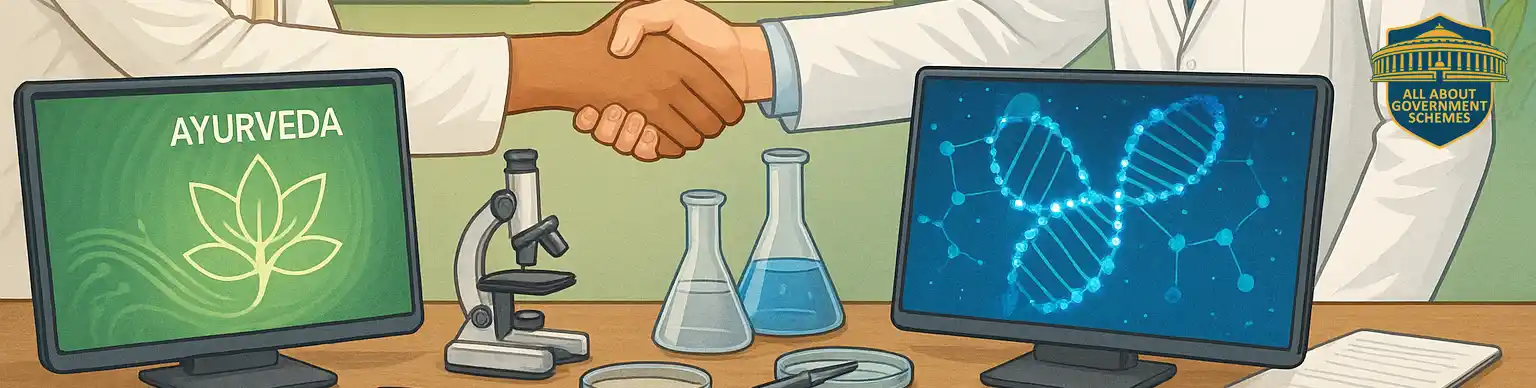
Drug Standardization in AYUSH means scientifically testing and validating AYUSH medicines (Ayurveda, Siddha, Unani, and Homoeopathy) to ensure they are safe, pure, effective, and of consistent quality.
It ensures that every herbal or natural medicine produced in India follows scientific parameters similar to those in modern pharmacology — like identity, purity, potency, and shelf life.
In simple words:
🧪 Drug Standardization means proving that AYUSH medicines are genuine, safe, and work the same way every time.
Objectives
| Goal | Description |
|---|---|
| ✅ Establish Quality Standards | To define scientific parameters for raw materials, formulations, and finished AYUSH medicines. |
| ⚖️ Ensure Purity & Safety | To detect contamination or adulteration in herbs or formulations. |
| 🔬 Promote Uniformity | To make sure the same medicine produced in different labs behaves identically. |
| 🌍 Meet Global Standards | To help AYUSH products qualify for export and international recognition. |
| 🧠 Scientific Documentation | To create pharmacopoeial monographs and standard operating procedures (SOPs). |
Why It’s Important
- Prevents adulteration or substitution of medicinal herbs.
- Protects patients by ensuring consistent dose and potency.
- Helps AYUSH drugs gain credibility in international markets.
- Supports AYUSH manufacturers in meeting WHO-GMP guidelines.
- Strengthens India’s position as a global herbal medicine hub.
Public Awareness & Education
- AYUSH conducts training workshops for drug manufacturers and pharmacists.
- Publications:
- Ayurvedic Pharmacopoeia of India (API)
- Siddha Pharmacopoeia of India (SPI)
- Unani Pharmacopoeia of India (UPI)
- Homoeopathic Pharmacopoeia of India (HPI)
- Citizens can freely access updates at
👉 https://pcimh.gov.in
Achievements So Far
- Standardization of >600 single drugs and >200 compound formulations.
- Development of reference standards for over 300 raw materials.
- Establishment of drug testing laboratories across India.
- Publication of monographs for classical AYUSH drugs.
- Integration with WHO-GMP and international pharmacopoeial standards.
Institutions Involved
| Research Council | Key Focus Area | Example Laboratories |
|---|---|---|
| CCRAS | Standardization of Ayurvedic formulations | Pharmacognosy Lab, NIA Jaipur; Pharmacology Unit, Delhi |
| CCRH | Standardization of Homoeopathic drugs | Drug Standardization Unit, Ghaziabad |
| CCRUM | Standardization of Unani medicines | Drug Standardization Research Unit, Lucknow |
| CCRS | Standardization of Siddha medicines | Siddha Pharmacopoeial Laboratory, Chennai |
What the Process Includes
Drug standardization in AYUSH has three major phases:
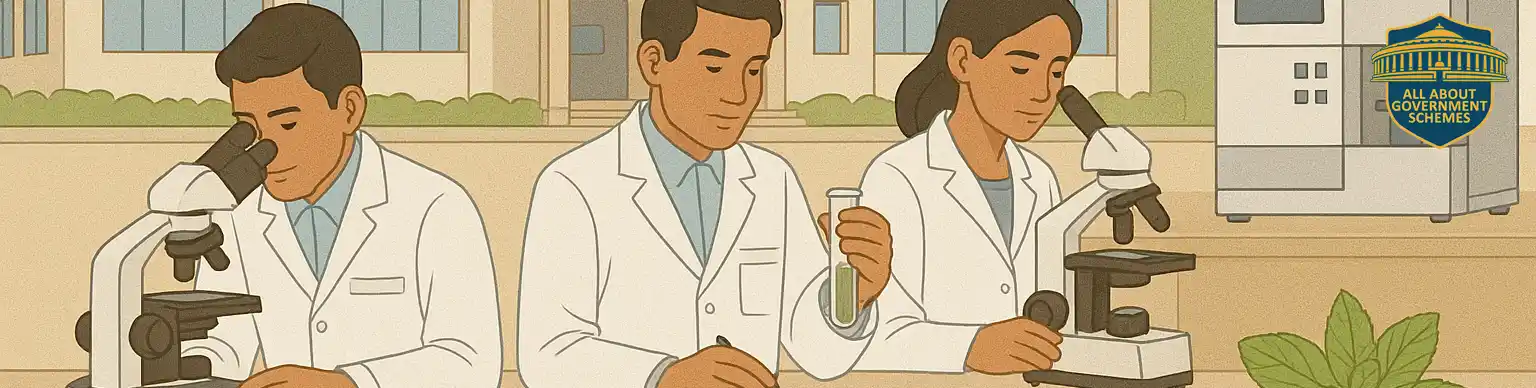
(a) Pharmacognostical Evaluation
Study of raw materials (herbs, minerals, etc.) using microscopic and macroscopic analysis to ensure identity and purity.
(b) Physico-Chemical Analysis
Testing the physical and chemical properties of the medicine — moisture content, ash value, extractive value, pH, etc.
(c) Biological / Pharmacological Evaluation
Testing how the drug behaves biologically — toxicity, dosage, and effect on different systems.
Other activities include:
- Development of Standard Operating Procedures (SOPs) for drug preparation.
- Preparation of Reference Standards for authentication.
- Contribution to the Ayurvedic, Siddha, Unani, and Homoeopathic Pharmacopoeias.
Drug Standardization Divisions
| Division | Function |
|---|---|
| Pharmacognosy Division | Identifies and authenticates medicinal plants. |
| Phytochemistry Division | Isolates and studies active chemical compounds. |
| Pharmacology Division | Tests biological activity and safety. |
| Analytical Chemistry Division | Performs instrumental testing like HPTLC, HPLC, and GC-MS. |
Who Are the Beneficiaries
| Beneficiary Type | Description |
|---|---|
| 🌿 AYUSH Manufacturers | Get standard protocols to produce consistent, high-quality drugs. |
| 🧪 Researchers & Scientists | Use reference standards for laboratory testing and formulation development. |
| 👨⚕️ AYUSH Practitioners | Can prescribe standardized, safe, and reliable medicines. |
| 🏥 Patients & General Public | Receive medicines that are safe, effective, and scientifically validated. |
| 📦 Exporters & Traders | Gain access to international markets with standardized certification. |
Who’s Who (Leadership & Key Officials)
(Names should be verified annually from the respective council websites.)
| Designation | Current Officer (Tentative 2025) | Organization |
|---|---|---|
| Chairperson, Pharmacopoeia Commission for Indian Medicine & Homoeopathy (PCIM&H) | Dr. Rabinarayan Acharya | Ministry of AYUSH |
| Director General, CCRAS | Dr. Rabinarayan Acharya | CCRAS, New Delhi |
| Director General, CCRH | Dr. Subhas Singh | CCRH, New Delhi |
| Director General, CCRUM | Dr. Anil Khurana (Additional Charge) | CCRUM, New Delhi |
| Director General, CCRS | Dr. V. Rajasekaran | CCRS, Chennai |
| Director, PCIM&H (Technical Standards Division) | Dr. K.K. Sharma | PCIM&H, Ghaziabad |
Related Bodies
| Organization | Role |
|---|---|
| Pharmacopoeia Commission for Indian Medicine & Homoeopathy (PCIM&H) | Publishes official monographs and quality standards for AYUSH drugs. |
| National Institute of Indian Medical Heritage (NIIMH) | Maintains ancient medical manuscripts and drug literature. |
| AYUSH Drug Control Cell | Oversees regulatory compliance and licensing of AYUSH drugs. |
| Central Drugs Standard Control Organisation (CDSCO) | Coordinates AYUSH-drug regulation for exports. |
Funding & Support
- Funded by: Ministry of AYUSH
- Through: Research Councils & Pharmacopoeia Commission
- Projects Include:
- Development of SOPs for classical formulations
- Drug authentication databases
- Laboratory infrastructure modernization
- Collaboration with CSIR, ICMR, and DRDO
Contact & Grievance Redressal
Pharmacopoeia Commission for Indian Medicine & Homoeopathy (PCIM&H)
📍 Kamla Nehru Nagar, Ghaziabad – 201002, Uttar Pradesh, India
📞 Helpline: +91-120-2783171 / 2783170
📧 Email: info@pcimh.gov.in
🌐 Website: https://pcimh.gov.in
For Research Grievances:
🖥️ https://pgportal.gov.in → Ministry of AYUSH → Select “Drug Standardization / Research.”
Common Public FAQs
| Question | Simple Answer |
|---|---|
| What is the purpose of AYUSH drug standardization? | To ensure quality, safety, and uniformity in traditional medicines. |
| Who approves AYUSH drugs? | Ministry of AYUSH through PCIM&H and research councils. |
| How can a company get its drug standardized? | By following SOPs and submitting samples to recognized labs under AYUSH. |
| Are AYUSH drugs tested like modern drugs? | Yes, using advanced instruments and scientific methods. |
| Is the data available online? | Yes, on PCIM&H and AYUSH Research Portal. |